


S4METRO played a decisive role in the development of the Toyota Accessible People Mover (APM), the electric vehicle that provided mobility for the Paris 2024 Olympic and Paralympic Games. From the dimensional control of the first prototypes to the approval of production parts, we accompanied the project since 2022.
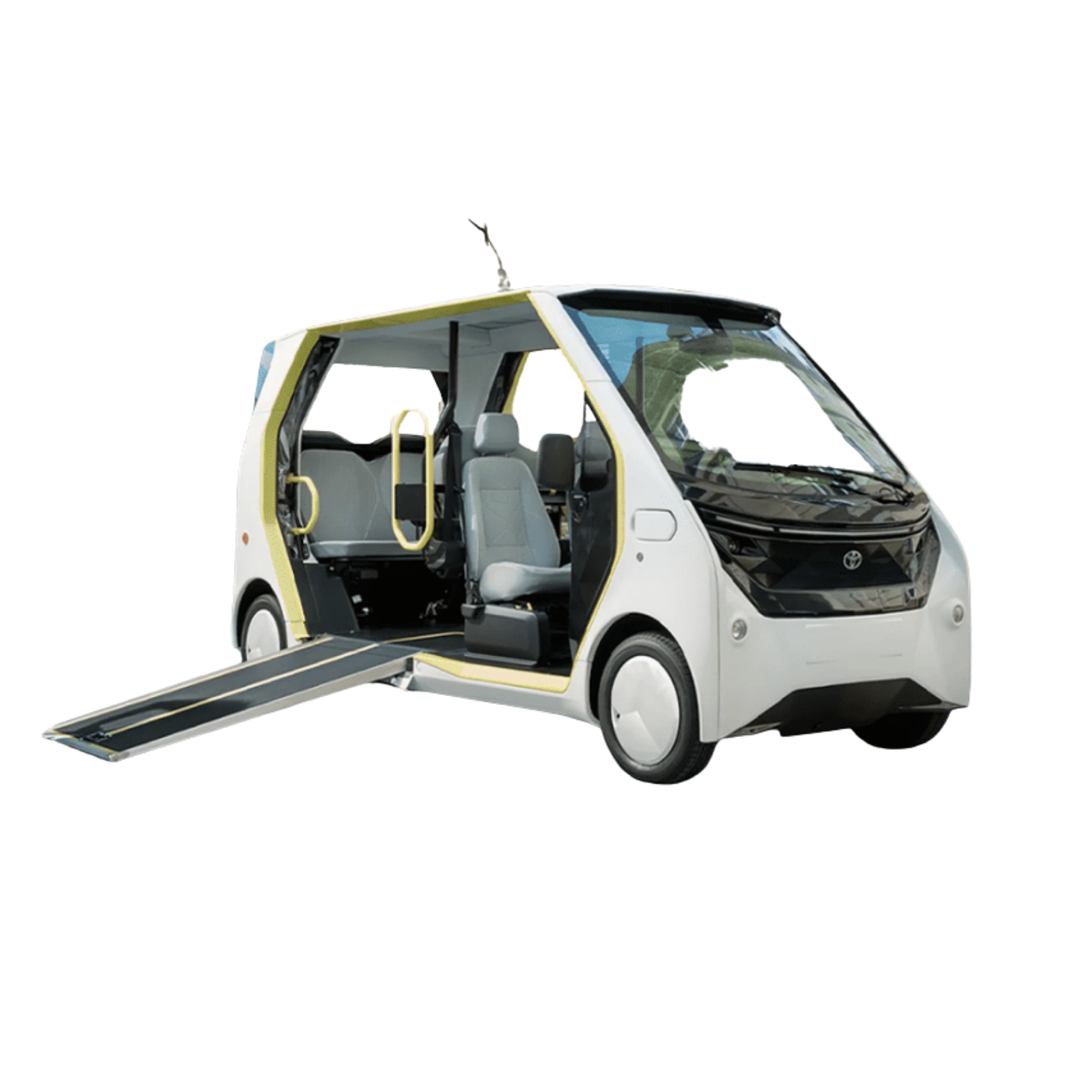
What is the Toyota Accessible People Mover (APM)
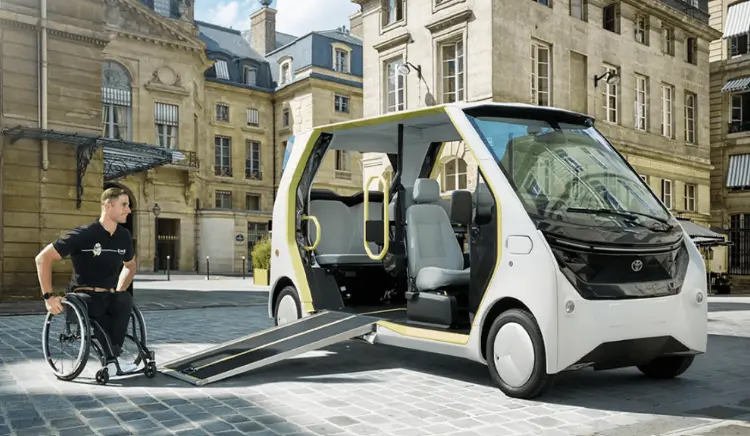
The APM is a 100% accessible electric vehicle, created by Toyota as part of its "Mobility for All" mission. Designed in Belgium, it was intended to transport athletes, visitors, and staff between Olympic venues, including wheelchair users, who access the vehicle via an integrated ramp.
Approximately 250 units circulated in Paris during the Games, also serving as goods transport and emergency assistance vehicles.
Produced in Portugal: Toyota Caetano factory in Ovar
Production of the APM started in February 2024 at the Toyota Caetano Portugal factory in Ovar. It was from Portugal that the vehicles travelled daily across the French Olympic facilities, a milestone for the national automotive industry and for the entire supply chain involved.
S4METRO's role: dimensional control and prototype validation
S4METRO's collaboration began in 2022, with an initial request for dimensional control and prototype validation. As the project progressed, involvement expanded to the entire dimensional quality chain:
- Measurement and calibration of production jigs, ensuring the repeatability of the assembly line
- Dimensional analysis of individual parts, with direct comparison to the CAD model
- Validation of sub-assemblies and final assemblies, before approval for mass production
- Consolidation of concepts and validation of geometries during the development phase
This cross-functional intervention allowed for the early detection of geometric deviations, avoiding costly rework and contributing to the optimisation of cycle times on the Ovar line.
3D scanning technology applied to the project
All metrology work was based on Creaform 3D scanning solutions. S4METRO used three 3D scanners: the HandySCAN BLACK Elite, the MetraSCAN BLACK Elite, and the HandySCAN MAX Elite, chosen on a case-by-case basis depending on the part's size and the required precision level:
| Equipment | Project Application |
|---|---|
| HandySCAN BLACK Elite | Scanning of small and medium-sized parts with high resolution |
| MetraSCAN BLACK Elite | Measurement of large assemblies and structures in a production environment |
| HandySCAN MAX Elite | Capture of large volumes without loss of accuracy |
The portability of these 3D scanners was crucial: it allowed measurements to be taken directly on the factory floor, without immobilising parts or interrupting production.
Results: precision, speed and data-driven decisions
The technical rigour of the S4METRO team translated into three concrete gains for the project:
- Validated geometries before the start of mass production
- Optimised cycle times, with calibrated and stable jigs
- Engineering decisions supported by dimensional data, not estimates